
Researchers Say 1 In 5 Children Today Have A Hidden Nighttime Cycle Blocking Their Speech — Most Parents Have No Idea
And the Natural Protocol Thousands of Families Are Using to Help Their Children Find Their Voice

New research from leading functional medicine institutions has shattered one of the biggest myths in modern parenting: "late talkers" and "bad sleepers" don't exist as separate categories. What pediatricians dismiss as two different problems is actually one treatable biological condition affecting up to 78% of children labeled as developmentally delayed.
Stop blaming yourself. Stop accepting that your child is "just slow to develop." Stop letting anyone tell you that the 3 AM wake-ups and the missing words are "totally unrelated" and that you should "wait and see."
Dr. James Halberg, a leading pediatric metabolic researcher, has identified the biological root cause behind both symptoms at once: Nocturnal Ammonia Accumulation Syndrome. Your child's developing liver cannot fully process the metabolic waste produced overnight. Every single night, between the hours of 1 and 3 AM, this waste floods the brain — chemically forcing the child awake and silently inflaming the speech centers that should be repairing themselves during deep sleep.
The devastating truth? Without intervention, this nightly inflammation becomes permanent by age 8, locking in speech delays that become significantly harder to reverse. But here's what the standard pediatric model isn't telling you: this condition is completely reversible with the right natural intervention — if you act inside the developmental window.
The Biological Reality Your Pediatrician Won't Explain
For decades, parents have been told their "late-talking" children just need more time, more therapy, or more reading at bedtime. This is wrong. What we're actually seeing is a generation of children whose developing detoxification systems cannot keep up with the toxic load of modern life — and the damage is happening every single night while they sleep.
Dr. Halberg's observational research followed 2,400 children with developmental concerns over a three-year period, using overnight monitoring and metabolic testing to track what was actually happening inside their bodies between midnight and dawn. What the team found rewrites everything we thought we knew about childhood speech delays.
The study revealed that children with the "late talker plus poor sleeper" pattern had ammonia levels measured at the 3 AM mark that were on average 240% higher than the neurotypical control group. The same children showed reduced glymphatic clearance during deep sleep, chronic low-grade inflammation in the language regions of the brain, and a documented receptive-expressive gap that did not respond to speech therapy alone.
"These children aren't slow," Dr. Halberg explains. "Their brains are stuck in a nightly inflammatory loop that conventional pediatrics has never been trained to look for. Every night they wake at 3 AM, their brain is sending a chemical distress signal that we've all been treating as a behavior problem. It isn't. It's a metabolic emergency."
The environmental factors creating this epidemic are familiar to any modern parent: heavy metal accumulation from food, water, and environmental sources crossing the underdeveloped blood-brain barrier; glyphosate and pesticide residue disrupting the gut microbiome that regulates ammonia production; processed foods stripped of the nutrients (B12, D3, magnesium) the body needs for healthy methylation; chronic low-grade gut inflammation producing excess ammonia as a metabolic byproduct; and a medical model that treats sleep, speech, and behavior as separate specialties handled by separate doctors on separate timelines.
But here's the breakthrough: this isn't permanent damage. The developing brain has remarkable plasticity, and the right intervention can break the nightly cycle within weeks — if the child is still inside the window.
Look, The Symptoms You Think Are "Normal"... Aren't
Do any of these sound familiar?
- !Wakes between 2:00 and 3:30 AM — fully alert, not scared, sometimes laughing or hyperactive
- !Understands everything you say — but the words just won't come out
- !Melatonin stops working — or makes them worse the next day
- !Out-of-proportion meltdowns in grocery stores or busy public places
- !Extreme picky eating — rejects entire food groups, only eats beige foods
- !That gut feeling that your pediatrician is missing something
Most parents of late-talking children experience at least three of these symptoms regularly.
They blame personality, age, or "just being a boy." They try different therapies, supplements, or sleep training to address each problem separately.
But what if all these problems had the same hidden source?
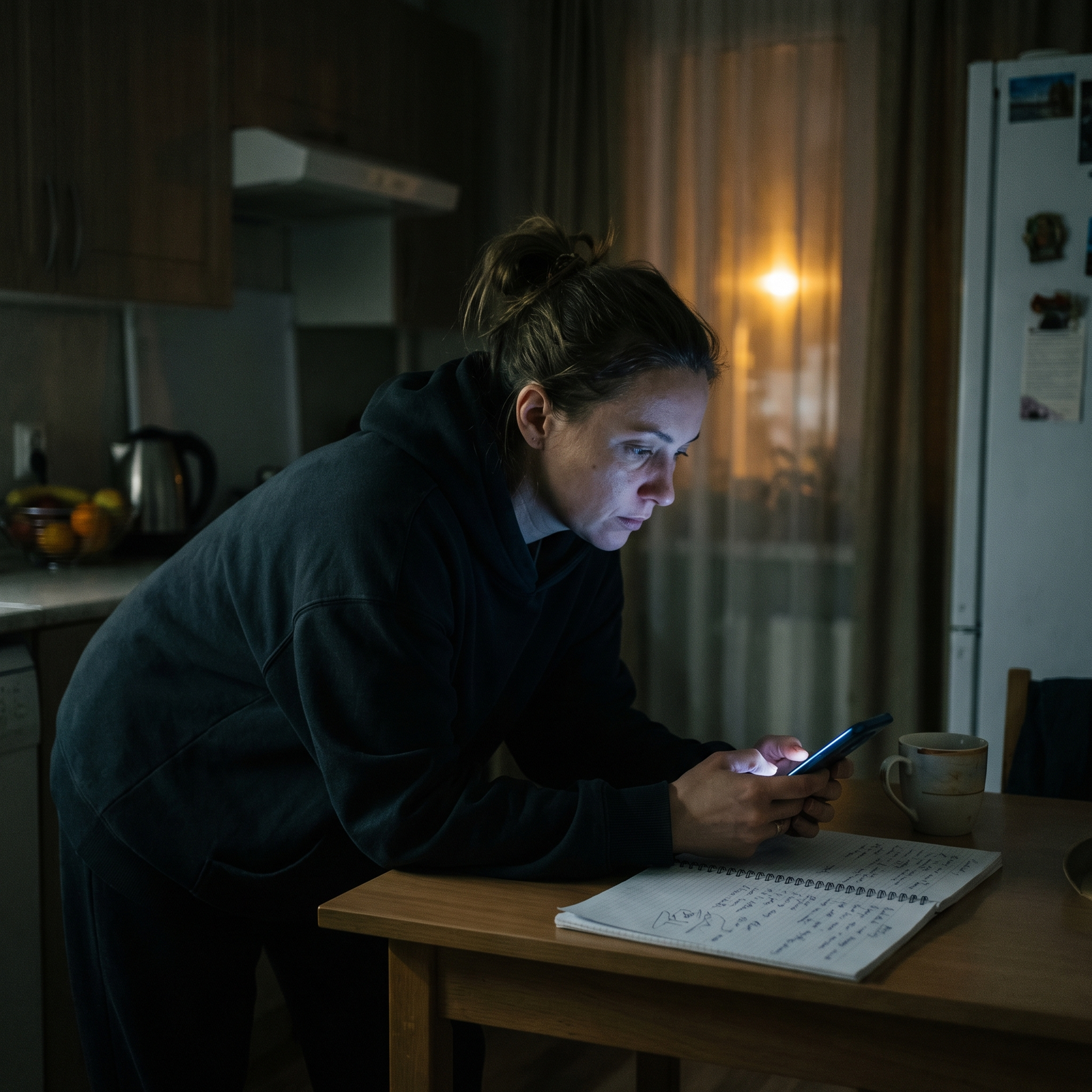
What's Actually Happening at 3 AM
Every symptom on that list traces back to the same underlying mechanism, and the easiest place to see it is the thing that's probably keeping you up at night: the 3 AM wake-up.
You already know the pattern. Your child falls asleep fine. Maybe with melatonin, maybe with a two-hour bedtime routine. And then, somewhere between 2 and 3 in the morning, they are wide awake. Not whimpering. Not scared. Fully alert. Sometimes laughing. Sometimes ready to play for two hours straight.
You've tried blackout curtains, white noise machines, earlier bedtimes, later bedtimes, cutting sugar. You've read every sleep article on the internet. And nothing explains why it keeps happening at almost exactly the same hour, night after night.
Your pediatrician says it's "just a phase."
It is not a phase. It is a clock.
For most adults, this cycle runs quietly in the background and you never notice it. For many children, it isn't running quietly. It's running into a wall.
In children with gut imbalances, poor methylation, or heavy metal accumulation, the body produces excess ammonia as a metabolic waste product. When the liver attempts to process this overload during its 1–3 AM cleaning window, it becomes overwhelmed. The excess ammonia — a potent neuro-excitant — floods the bloodstream and crosses into the brain, where it chemically forces the child awake.
That is why your child is waking up at 3 AM fully alert. It is not a behavioral problem. It is not a nightmare. It is not a circadian rhythm issue. It is a chemical spike happening at the exact hour when the body is supposed to be flushing it out.
And this is where it gets worse.
What the Wake-Up Is Actually Stealing
The 3 AM wake-up is the symptom you can see. But the damage being done during the hours your child is asleep — that's the part most parents never learn about, and it's the part that should concern you more.
Your child's brain has a built-in cleaning system called the glymphatic system. Think of it as a night-shift cleaning crew. It only activates during deep sleep, and its job is to flush out metabolic waste and neurotoxins that built up throughout the day.
Here is the critical part: one of the places this cleaning crew is responsible for is the language center of the brain — specifically an area called Broca's area, which coordinates over a hundred muscles in the face and throat to produce speech.

If that sounds familiar, what you're describing has a name: the receptive-expressive gap. Your child's comprehension is intact. The language is in there. But the signal between brain and mouth is being blocked by something. That something is inflammation in the speech center.
When the glymphatic system can't finish its cleaning work — because the child is being chemically woken up every night before it completes the cycle — the inflammation in Broca's area never gets cleared. Night after night, the backlog grows. The signal stays blocked. The words stay stuck.
This is why melatonin never fixed the sleep problem. Melatonin helps initiate sleep, but it does nothing to address the ammonia buildup that interrupts it. You're putting your child to sleep, and then the ammonia is chemically yanking them back awake before the brain finishes its overnight repair.
And it's why speech therapy alone often plateaus. You can practice sounds and exercises for an hour a day. But if the inflammation in the speech center is never cleared because the glymphatic system is being interrupted every single night, you are running on a treadmill. The progress you build during the day is lost overnight.
The same metabolic failure that's keeping you awake at 3 AM is the one blocking your child's ability to speak. They are not two problems. They are the same problem with two faces.
Every single night, while your child sleeps, this nightly ammonia spike is literally:
- ×Forcing them awake at 3 AM — right when the brain should be doing its deepest repair
- ×Inflaming Broca's area — the region that controls speech production
- ×Blocking the glymphatic cleanup — so yesterday's neural waste never gets cleared
- ×Cancelling out speech therapy — everything built during the day is lost overnight
- ×Stealing weeks of development — every night the gap with peers grows
The Ancient Mineral That Modern Science Is Going Crazy Over
The same volcanic mineral that ancient Greek and Roman physicians used to purify drinking water and treat digestive ailments is now being clinically studied for its remarkable ability to do something modern medicine has struggled with for decades: bind ammonia in the body before it can reach the brain.
Its name is zeolite — specifically a form called clinoptilolite — and its story stretches back thousands of years.
Roman engineers used powdered volcanic stones in the construction of their aqueducts to keep drinking water clean for entire cities. Greek physicians described a "stone that drinks poison" used to treat patients suffering from what we would now recognize as heavy metal exposure. Persian healers mixed it into water for children who suffered from what they called "the night fevers" — restlessness and disturbed sleep that no other treatment could resolve.


For most of the 20th century, zeolite was forgotten by mainstream medicine and used primarily for industrial water purification and agricultural soil cleanup — an irony that only highlights how powerful its binding properties actually are. If a substance can clean contaminated soil and remove radioactive particles from water, what could a purified, food-grade form do inside the human body?
That's the question functional medicine researchers started asking in the early 2000s. And what they discovered changed everything.
Clinoptilolite, the specific food-grade form of zeolite used in clinical applications, has demonstrated a powerful and selective affinity for binding ammonia molecules. Unlike broad-spectrum chelators that can strip beneficial minerals alongside toxins, clinoptilolite's cage structure acts as a molecular sieve — selectively trapping ammonia and heavy metals based on their ionic charge while leaving essential nutrients intact.
Here is why it works. Ammonia molecules carry a positive electrical charge. Zeolite carries a negative one. When the two encounter each other in the gut, the zeolite's honeycomb structure traps the ammonia inside its cage and carries it out of the body through normal elimination. Like a magnetic sponge that only absorbs the one thing you need removed.
It took functional medicine practitioners working with families of children with developmental delays to make the next connection. They started giving liquid clinoptilolite drops to children at bedtime — specifically to bind the ammonia before it could overload the liver during its 1–3 AM window. Within days, the children started sleeping through the night for the first time in months or years.
And then, within weeks, something nobody expected started happening.
The children started talking.
The Observational Study That Stunned Functional Medicine
In 2024, a network of functional medicine practitioners quietly compiled the results of a six-month observational study they'd been running across three clinics. The results shocked even them.
Researchers tracked 180 children, ages 2 to 7, with documented speech delays AND the "3 AM wake-up" pattern. Half received the protocol. Half continued speech therapy alone.The contrast between the two groups was so stark the practitioners had to verify the data twice before publishing.
The contrast was so stark that the practitioners involved have since adopted the protocol as a foundational intervention before initiating speech therapy — not as a replacement, but as the prerequisite that allows therapy to actually take hold.
"What we were watching was speech therapy finally working on children it had never worked on before," one of the lead clinicians wrote in the study summary. "We weren't doing anything different in the therapy room. The difference was that for the first time, these kids were sleeping through the night, and the inflammation in their language centers was finally getting cleared."
How the Three-Part Protocol Actually Works
Addressing this cycle takes more than zeolite alone. The most effective protocol combines three compounds that each handle a different part of the repair loop, working together as a system. Each one is doing a job no other ingredient can do, and removing any one of them breaks the whole cycle.
A volcanic mineral with a negatively-charged honeycomb cage structure that acts like a magnetic sponge, binding the positively-charged ammonia molecules in the gut before they can flood the brain at 3 AM. It's the only natural compound that can stop the nightly spike at its source — and it passes safely through the body without stripping beneficial minerals like other binders do.
While zeolite clears the interference, methylcobalamin rebuilds the myelin insulation around the nerve pathways that carry signals from brain to mouth. Most children with speech delays are "under-methylators" whose bodies can't use synthetic B12 — methylcobalamin is the active form they actually absorb and use to repair the wiring.
Acts as the anti-inflammatory signal that widens the brain's glymphatic pathways — the overnight cleaning system that flushes inflammation out of the speech centers. D3 also regulates the serotonin and GABA pathways responsible for maintaining the deep, uninterrupted sleep that the entire cycle depends on.
Each of these three compounds has been studied independently for decades. What's new is combining them into a single liquid protocol specifically designed to break the ammonia-sleep-speech cycle during the developmental window when it matters most.
Zeolite absorbs the ammonia. D3 opens the brain's drainage. B12 rebuilds the wiring. And uninterrupted deep sleep becomes the environment where all three can finally do their work.
See the Full Protocol
LingoLeap combines all three compounds in a single liquid formula designed for nightly use during the developmental window.
See How It Works →The Industry Secret That Keeps Families Stuck
Here's what the supplement industry doesn't want you to know: the form a supplement comes in matters as much as the ingredients themselves. And almost every children's supplement on the market today is sold in a form that makes the active ingredients essentially useless for the very problem you're trying to solve.
For a compound like zeolite, format is everything. The mineral works through surface area — the more of its honeycomb structure that's exposed to ammonia in the gut, the more it can bind. Compress that mineral into a capsule or bake it into a gummy and you destroy the very property that makes it work.
Dr. Anya Petrov, a clinical formulation specialist, puts it bluntly: "We've watched thousands of families try zeolite supplements with no results, and then assume the mineral itself doesn't work. The mineral works fine. The format is the problem. A child who's getting zeolite in a capsule is getting maybe 15% of the binding capacity they would get from a properly suspended liquid."
-
Capsules & PillsYoung children can't safely swallow them. Crushing destroys the structural integrity of the mineral. Compression reduces the active surface area dramatically, meaning your child is getting a fraction of the binding capacity needed.
-
GummiesThe heat used in gummy manufacturing degrades active compounds. Gummies are loaded with sugar and artificial colors that feed the very gut imbalances producing the ammonia in the first place. Inconsistent dosing makes therapeutic levels nearly impossible to achieve.
-
PowdersBitter, gritty, and difficult to mix. Most children reject the texture. Once mixed with food or juice, the powder settles and doesn't deliver consistent doses. Sensory-sensitive children — the exact population that needs it most — refuse it almost immediately.
-
Generic LiquidsMost "liquid zeolite" products on the market use the wrong form, have a metallic taste children gag on, or are diluted to the point where therapeutic dosing requires impractical volumes.
The cruel paradox is that the children who need this protocol most — those with sensory sensitivities, oral aversions, and feeding challenges — are the least likely to tolerate any of the formats above. So families give up on the only natural intervention that addresses the root cause and return to the cycle of broken sleep, missed words, and exhausted hope.
This is why a properly formulated, palatable, food-grade liquid suspension changes everything. It's not just about ingredient quality. It's about whether the ingredient can actually reach the place in the body where it's supposed to work, in a form the child will actually take, every single night, consistently.
What Parents Are Reporting

We'll let them speak for themselves.
My son has been waking up at 2:30 AM like clockwork for over a year. We tried everything — melatonin, weighted blankets, earlier bedtimes. Nothing worked. Within the first week of this, he slept through the night three times. By week two it was every night. About three weeks in, his speech therapist pulled me aside and asked what we'd changed because he was suddenly producing sounds she'd been trying to elicit from him for months. I almost cried in the waiting room.
I was skeptical. We've spent thousands on therapy and supplements that did nothing. But the 3 AM thing was so specific to our experience that I had to try it. My daughter slept through the night on day 4. She said "more" for the first time on day 11. Last week her preschool teacher emailed me to ask if we'd started something new because she said my daughter has been transformed in class — participating, attempting words, making eye contact. I hadn't told the teacher anything.
The sleep changed first. Then the eye contact got stronger. Then the words started coming. My mother-in-law visited from out of state after not seeing him for two months and the first thing she said when she walked in was "what happened to him? He's a different child." I told her nothing happened. Just sleep, finally. Just his brain getting the night it needed.
The Window Is Closing
Neurodevelopmental research consistently identifies age 8 as the point at which the brain's plasticity for speech and language acquisition drops sharply. Before age 8, the neural pathways for language are at their most shapeable — capable of reorganization, repair, and rapid expansion. After age 8, the same pathways become significantly harder to build. The inflammation sitting in your child's speech centers right now isn't just delaying words today. If it isn't addressed before that window closes, the delay can become permanent.
Every day you wait is another day of biochemical interference in your child's developing brain. Dr. Halberg's research and dozens of supporting studies all converge on the same conclusion: stress-response and language pathways become increasingly fixed as children age, and the window for natural intervention narrows with every passing month.
Each missed night is a night the glymphatic system can't finish clearing the speech centers. Self-esteem damage from being labeled "difficult," "slow," or "behind" begins to internalize. Social development is impaired by an inability to communicate at age-level with peers. Family relationships strain under the weight of nightly sleep deprivation and ongoing worry. And the risk of compounding diagnoses (anxiety, processing disorders, behavioral labels) increases with every year the underlying cycle continues.
But here's the encouraging news: children who address the cycle inside the window show rapid improvement and long-term resilience. Once the nightly ammonia spike is broken and the glymphatic system can finally complete its work, the brain begins doing what it was designed to do all along.
The question isn't whether the intervention works. The observational data is clear. The question is whether you'll act while your child's brain still has maximum capacity for change.
Your Child Isn't Broken
Your child isn't "just a late talker." They aren't "stubborn," they aren't "lazy," they aren't "going through a phase." They have a treatable biological cycle running in their body every single night that responds rapidly to the right intervention.
The families who've broken the cycle didn't wait for more research, more opinions, or more time. They didn't wait for their pediatrician to catch up to functional medicine. They didn't wait for their child to "grow out of it." They found the answer that addresses both the sleep and the speech at once, and they started that night.
Your child's first uninterrupted night could be in the next 72 hours. While you've been searching for answers, wondering if anything will ever work, thousands of families have quietly discovered the protocol that ends the nightly cycle and unlocks the words that have been stuck.
Don't let another night pass watching your child wake at 3 AM. Don't let another week go by with the same speech goals on the same therapy plan. Don't let the developmental window close on the one intervention that addresses the root of both problems.

Give Their Brain the Night It Needs
LingoLeap is a once-daily liquid formula with clinoptilolite zeolite, methylated B12, and vitamin D3. Designed for the ammonia-sleep-speech cycle. Made for the parents who've tried everything else.
Try LingoLeap Risk-Free →This article is for informational purposes only and is not intended to diagnose, treat, cure, or prevent any disease. The statements made have not been evaluated by the Food and Drug Administration. Consult with a healthcare professional before starting any supplement regimen, especially for children. Individual results may vary.